Looking at the languages from ME and our world we can see a clear connection and something like this (creating the hoarding memory) can be seen in later fantasy both written and illustrated work.
For example Tolkien used some words for certain things like Mithril (metal) or Warg (dire wolf). Both of these words have roots in a certain language already but if it wouldn't be Tolkien who started to use these words the wouldn't show in other fantasy settings. In Dungeons and Dragons we now have Mithral and Worg having the very same meaning (not only in D&D). This also applies to races and class archetypes. For example Tolkien wrote the story about Bilbo the Hobbit. In D&D we have Halflings, that were also called hobbits in the beginning and resembled Tolkien's hobbits very much. Ents are common as well, we call them Treefolk in general but well, what comes to your mind when someone says Treefolk (Anyway changed to Treant in D&D)? Orcs as relatively intelligent but evil creatures also come from LotR and I could go on...
The fact that ME has it's own history (3000 years old), its own geography etc also led other people when creating fantasy worlds to have this as well. Not just races like elves, dwarves, gnomes etc but also the whole geography and history starting with the creation of the world (or the myths and legends if there aren't some immortal elves that could tell you the story from first hand^_^)
I give Dungeons and Dragons as an example but that game was not entirely and directly influenced by Tolkien himself as many people claim and write studies about. This game was influenced by many fantasy authors, Tolkien among them. (there were legal issues between TSR and Tolkien and later a de-tolkienization took place in D&D)
(Dragon Magazine, gotta find them)
I personally never took D&D as something relating to Tolkien, none of the fantasy from TSR/WotC seemed similar to Tolkien to me. Yes, I admit they have the same/similar races and names/terms used but that's more because this has already been established. D&D though defined it much more and many people derive from this today. And as many illustrations are done for all this 'gaming industry' it tends to become similar in design.
When seeing artists write about their influences they many times name artist working for the same company or writers that are not actually Tolkien.
But still without Tolkien our minds wouldn't be open for something like this - fantasy and that's why we have to give him credit.
Now the question coming from all this is: How come Fantasy Art artists are not influenced by Tolkien (with the exception of Ted Nasmith) when everyone seems to think that it was him that started Modern Fantasy?
Here I feel that my knowledge lacks a lot of information. I know a lot about the history of RPGs (TSR/WotC) and a lot about Tolkien's work. But I don't see the analogy (I do in certain things, but those were already described in Dragon Magazine) and the very same is about the art. Here's Ted Nasmith and Alan Lee on one side (Tolkien) and other artists on the other. Do I see resemblances? Um not really...
Saturday, October 22, 2011
Back to the roots - J.R.R Tolkien
Labels:
Reflective Case Study
0
comments
When I was 10 years old someone in our family came home with a copy of J.R.R. Tolkien's The Lord of the Rings (LotR in short). This is a trilogy published in 1955 (Fellowship of the Ring) and 1956 (Two Towers, Return of the King). I finished the book quite fast and was fascinated by it. I'm not really sure what exactly it was that so made me crave for more. But it happened and I wanted to read more from fantasy worlds like the one of Middle Earth. I read everything from Tolkien that was published by that time and then read his biography and commentary on his work. Later I started reading many fantasy novels and books that I could get my hands on. So where does this crave come from? We'll look on it after a brief biography of J.R.R. Tolkien.
J.R.R. Tolkien was born on 3rd January 1892 in Bloemfontein in the Orange Free State. His both parents died when he was young. Mabel - his mother - left J.R.R. Tolkien in the care of Father Francis Morgan - a priest at the Birmingham Oratory. At King Edward's School he developed his linguistic talent and later began inventing his own languages. (elven languages - sindarin and quenya mainly)
John Ronald Raul graduated at Oxford (English language and literature). During the World War he served the army. After war he worked as a professor of Anglo-Saxon at Oxford where he soon prove himself to be one of the finest philologists in the world. At that time he was already working on a collection of myths and legends that were later published under the name of Silmarillion. (HarperCollins 2003)
In 1937 The Hobbit was published. It was successful and people wanted more 'hobbits'.
The Lord of the Rings was published in 1955-1956. The book became so popular that it started a completely new era of 'Modern Fantasy Genre' (Christopher Mitchell 2003).
Professor Christopher Mitchel of Wheaton College, Director of the Marion E. Wade Center and also Assistant Professor of Theological Studies at Wheaton made a series of seminars and discussions concerning J.R.R. Tolkien and C.S. Lewis. In those he looked closer on the new 'taste' among the reading public and why Tolkien's work was so successful.
In late 1950s there was a huge discrepancy between critics considering LotR an inferior literature even 'juvenile trash' and the phenomenal popularity among the reading public. In the upcoming decade critics said that the Tolkien craze would fall into oblivion in few years. But even after 40 years we are still here with many Tolkien fans and people wanting simply more. At that time people noted that Tolkien's work is not read by a certain group of people(in this case - children, as this kind of stories were considered children's stories) but by a doctor graduated from harvard, solicitor, police officer, farmer, another writer etc. All these people though had something common. What was it that Tolkien gave them?
Later in his speech Mitchel started to talk about something called 'hoarding memory'. Tolkien used this term to talk about the memory Elves have. Elves in Tolkien's world are 'immortal beings' (they can be killed but if not they live eternally) and carry on the memory of the world. The hoarding memory can be found in myths and legends and in even later stories. All of those bear the memory of one original - religious - story. All the stories are a shadow to the very first story (the eden, kain and abel). We perceive such memories even in LotR (if we are familiar with the legends and myths from Silmarillion). All these try to awaken something in us.
Tolkien is taking us out from our own world to awaken us. All this starts with imagination. We reject our world thus we need to be awakened in another world and return back our own world to become awakened in it. This is not escapist as many people and mainly critics think so. (Tolkien/Lewis)
Why I write about this? In a way I agree. The thing is that the hoarding memory is there, it is something that we can trace. We might not consider it religious and looking at Tolkien influenced work (it isn't religious) but still it started somewhere and at that time it was religious. There is the universal truth underline in all there is in the nowadays work (and not necessary christian). J.R.R. Tolkien said that he is christian and that this can be deduced from his work. But did anyone notice that?
There are many people who noticed that but for most the fact that the LotR is cut from anything religious makes it hard to understand why such a book should be religious. One has to look deeper and find it for that it is good to read J.R.R. Tolkien letters and his biography. (J.R.R. Tolkien: A Biography by Humphrey Carpenter, edited by J.R.R. Tolkien and The Letters of J.R.R. Tolkien J.R.R. Tolkien, Christopher Tolkien, Humphrey Carpenter).
In these books we learn about Tolkien's personal and academic life. Ronald's life was a difficult one. Death of his father when he was 4 years old, death of his mother in 1904 and the stay with Father Morgan marked Tolkien a lot. Living during both World Wars is also something that has influence on one. (I would like to quote Tolkien when he was talking of himself as a hobbit, but I don't remember it exactly and I don't remember from which book it came). The claim 'I'm a hobbit' though tells us a lot about Tolkien if we are familiar with hobbits as a race or (Frodo or Bilbo Baggins).
Anyway in the letters we learn more about the spiritual look on Middle Earth and this cannot be denied as Tolkien wrote it himself.
Nowadays J.R.R. Tolkien LotR or Hobbit is considered as a must read book even by high schools (at least both I attended had this under 'obligatory literature'). But no one at the school actually gave me any insight on why and how LotR/Middle Earth was created.
In both books we learn about where certain things came from - Norse mythology for example and we learn about the creation of elven language and tengwar (written elven language - it means letters in quenya).
stsung's note:
When I was around 12 I was able to write in tengwar and was capable of reading a text in quenya. Study of this language taught me about other scripts and languages. Tengwar is alphasyllabary writing system and as I wasn't familiar with such systems it led me to discover primarily Devanagari and Sanskrit (I was familiar with phonetic writing systems - Japanese, Chinese, latin letters and cyrilic based systems). Elvish language is a constructed one but has a rules that can be easily followed and that tell one from the writing system what to expect and thus memorize and easily use.
In LotR and Hobbit Tolkien also uses two different runic systems that are based on anglo-saxon and norse writing systems (this is much more familiar as this system uses letters both consonants and vowels and uses the same way as latin letters. Germanic languages were using these before they started using latin letters).
By studying the writing systems, we fall back on ancient languages and mythology that also help us understand more the constructed world of Middle Earth.

Finding a topic for my RCS part 4
Labels:
Reflective Case Study
0
comments
"Pátrání mne přivedlo do kontaktu s vůdčímí výtvarníky z celého světa - ve Spojených státech, Asii a na středním východě, v Kanadě a jižní Americe, po celé Evropě. Na takové mezinárodní sbírce je fascinující pozorovat rozdíly i podobnosti moderního výtvarného fantasy umění, pocházejícího z nejrůznějších zemí a kultur po celém světě.
Ta nejlepší fantasy díla nám poskytují lákavou únikovou cestu do světa uvěřitelnosti, cestu kde se smazávají hranice mezi vnější realitou, kterou všichni sdílíme, a vnitřní duševní krajinou výtvarníka. Dnes je však zjevná jistá globalizace žánru fantasy, nepochybně díky vlivu všeobecně rozšířených fantasy filmů, počítačových her a dalších populárních médií ze Spojených států a Evropy. To často vedeke vzniku děl, která se snaží přijmout podobný výklad všeobecně známých témat fantasy.
Proto jsou si dnes výtvarné styly snažící se dosáhnout elegantního efektu hodně podobné, a to zejména v oblasti designu." (McKenna 2007)
Few years ago I received a book entitled Fantasy Art Now by Martin McKenna. It is actually a collection of work from the leading fantasy artists and from aspiring fantasy artists. Going through the book I realized that I already know most of these illustrations and if not the illustrations I know the artists (there are illustrations that were published in this book for the first time).
I made few observations:
1. On the illustrations there are many times depicted characters or scenes from something I already know. Is that the reason why the artists are famous and considered the leading artists? Because they are known via the commercial sphere?
2. There are similarities that we can observe and some kind of globalization of the fantasy genre (McKenna 2007). After reading the notes from certain artist I realized that none of them actually say that they were influenced by this or that fantasy world etc. but many note that they had this or that artist as an idol. (even though their work hardly resembles that one.)
McKenna's introduction (quoted in Czech above, I couldn't find the original one) actually summarizes my second point. According to McKenna we can observe globalization of the fantasy genres most probably because of fantasy movies and computer games on the rise. This leads to art that shares a common known fantasy themes/archetypes. This often results in similar designs of fantasy art. (this formulation is pretty bad, but now I just need to grasp the idea somehow). All this most probably fallbacks to Tolkien and later published Dungeons and Dragons whose fantasy setting was directly influenced by J.R.R. Tolkien's world.
When looking for something in my room I came across TSR Collectors Art cards and calendars. Calendars were for me a collections of Fantasy Art from certain artists as I couldn't buy prints of those work as I can most probably do nowadays. Among these I came across DragonLance and Ted Nasmith Lord of the Rings calendar. As those are relatively old. The illustrations from these calendars are from 1980s till late 1990s and they have something in common. Looking at these one can clearly see that highly realistic rendition of reality (with the aspect of fantasy theme) is there. The colors though being more fairy tale like.
"His approach to illustrating Tolkien draws on influences such as 19th century 'old school' landscape and classical painting, as well as 'magic realism', fairy painting, the classic illustrators, and the visionary/psychedelic art of the 1960s.
Besides the sheer pleasure of bringing Tolkien's world to light, he sees his fantasy art as a bridge between the realm of 'everyday' and 'faerie', faerie being Tolkien¹s term for the enchanted world of our dreams and nightmares; that great ancient-realm of Story." (HarperCollins 2003, Ted Nesmith Interview)
After looking at these illustrations and reading some of the comments I would like to take similar path as Martin McKenna. He created a collection of works with artist commentary to show it. In my case I'd like to research more were the globalization of fantasy art came from.
Friday, October 21, 2011
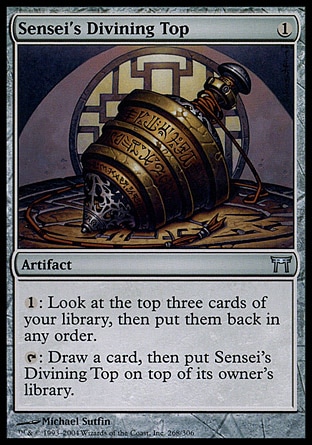
Sensei's Divining Top
Labels:
Visual Production
0
comments
After manga girl I decided to paint on Sensei's Divining Top. What I had in mind was this cards background to become pink(ish) with sakura trees and petals. This idea was already realized by someone - Yawgmoth - but I wanted to do this a year ago already. Now the time has come.
What I wanted to try and figure out is what base color I should use and what should I do to get a clear pink color on that base color. I ended up mixing ombre and buff titanium, but any shade of grey would work I guess.
After this coat I started adding more layers - pink. It resulted in a really beautiful color. It was so bright I had to do this process once again to make the color look dull.
When this was done I tried painting the sakuras and some petals. I finalized it the next day.
What I wanted to try and figure out is what base color I should use and what should I do to get a clear pink color on that base color. I ended up mixing ombre and buff titanium, but any shade of grey would work I guess.

After this coat I started adding more layers - pink. It resulted in a really beautiful color. It was so bright I had to do this process once again to make the color look dull.

When this was done I tried painting the sakuras and some petals. I finalized it the next day.

Thursday, October 20, 2011
Color Out of Space
Labels:
Visual Production
0
comments
I picked up leaves from different plants/trees on our garden and assembled them. Here is what it ended up looking like. I actually took leaves forming one kind of gradient. I realized that I could create a different one starting with yellow once again but going through orange to dark brown. There are so many hues and colors outside!

Monday, October 17, 2011
Finding a topic part 3
Labels:
Reflective Case Study
0
comments
Last week I spent most of the time reading some magazine articles, web pages and some essays concerning Role-Playing Games, Fantasy illustrations, Fantasy illustrators and Jim Roslof (Fantasy Artist and Art Director for TSR).
Well, I wasn't really looking for something in particular. Just trying to figure out in which direction I should go and what my work would be about. Defining Fantasy is something difficult to do and well if I'm going to do that I'll just choose one point of view and try to prove it. Some people will disagree, some people will agree. But the most important thing is this - there are some borders for each individual that define fantasy. For some slightly erotic image depicted in a really weird way is a fantasy. For someone it would never be a fantasy picture. So what are the boundaries of Fantasy Art?
I stumbled across many articles concerning J.R.R Tolkien and fantasy in general. The Fantasy subgenre - Sword and Sorcery - is the largest and oldest in the role-playing games history. Fantasy RPGs (based on this genre) are set in medieval setting (Europe) that also has 'fantastic' elements. That can be magic, magical beings, gods, nonhuman beings (elves, dwarves, gnomes etc). Now comes the question - were these worlds influenced by Tolkien's books (Lord of the Rings, Hobbit etc?).
In late sixties Hobbit and LoTR were really successful in the USA. In 1973 Dungeons and Dragons was created and fantasy settings followed. (the original D&D is set in fantasy world that is really similar to Tolkien's one)
Lord of the Rings had a decisive influence on the emergence of RPGs. Due to this, elements of Tolkien's creations (that are already based on mythology - Nordic and German mosty) can be found in many fantasy worlds. This means both geographic places and names (mithral/mithril comes to mind), races (elves, hobbits/halflings, dwarves etc)...
Also the RPG classes (archetypes) were taken from LotR. Ranger from Aragorn or Legolas, hobbits being thiefs/halflings rogues, dwarvs warriors etc.
This does not really tells us much about art though. The illustrations for Hobbit and LotR done by Tolkien weren't really accepted at first and were 'published' years later. Most illustrations come from magazines, card games and role playing games settings/rule books. These are products of a company and companies have art directors for that. But for some reason the view on fantasy art seems rather similar. So what makes an art a fantasy art?
-----------------------------
In 1993 WotC released a fantasy trading card game - Magic: The Gathering which was a rather dramatic event in RPG history. Many RPG gamers switched to playing Magic and this meant that the RPG sales went down by a lot. The boom of trading/collectible card games ended in 1996. Very few card games survived, but some stayed Magic: The Gathering and Legend of the Five Rings notably.
Later the shares on the market became balanced and now both of these coexist together without ruining the other.
Manga Girl no.2
Labels:
Visual Production
0
comments
This time I decided to try carbon copy technique. I did not expect the carbon to be visible on the card's surface but in the end it looks fine (even on a really dark background). I decided to try this because when even drawing the very same image I drew already I usually mess up somewhere. I wanted to know where the problem lies and if I will have the same problems with...hm..not seeing the whole picture. And I noticed that as well when doing this.
Today, what I wanted to do is to carbon copy a previous drawing I made and then color it and try to add some details. I got a much better result then I expected but there is much more space for improving.
I scanned my image because I want to keep it and well because it is drawn on a really hard/heavy paper (multilayered), I printed it out. That was what I used to copy it.
After that I could see the copied outline on the card I wanted to alter. As I don't have aceton for getting rid of the original print I decided to paint over it and see if I can manage to cover the print fully. (here I need to try a different method, most probably I will try painting it black, then white and then I will apply the skin color - I'll try this next time, I have one more commission to do).
Then I started with the base coat. It was rather difficult to do, not what I expected. The base coat was actually yellow (it does not show on the picture...). After that I started with pink/orange/yellow layers.
When the layers were done - well more would be better I guess - I tried to outline everything and I realized that I forget one leg...ouch. That did not end up good.
Time for some hair color and final touches. I tried to figure out what to do with the face. It seems that I can't focus on something as whole. I need to work on that and be more cautious about that.
On the following photo, there is the original drawing + the final version of the painted card.
A scan of the card.
Today, what I wanted to do is to carbon copy a previous drawing I made and then color it and try to add some details. I got a much better result then I expected but there is much more space for improving.
I scanned my image because I want to keep it and well because it is drawn on a really hard/heavy paper (multilayered), I printed it out. That was what I used to copy it.

After that I could see the copied outline on the card I wanted to alter. As I don't have aceton for getting rid of the original print I decided to paint over it and see if I can manage to cover the print fully. (here I need to try a different method, most probably I will try painting it black, then white and then I will apply the skin color - I'll try this next time, I have one more commission to do).

Then I started with the base coat. It was rather difficult to do, not what I expected. The base coat was actually yellow (it does not show on the picture...). After that I started with pink/orange/yellow layers.

When the layers were done - well more would be better I guess - I tried to outline everything and I realized that I forget one leg...ouch. That did not end up good.

Time for some hair color and final touches. I tried to figure out what to do with the face. It seems that I can't focus on something as whole. I need to work on that and be more cautious about that.
On the following photo, there is the original drawing + the final version of the painted card.

A scan of the card.



Subscribe to:
Posts (Atom)

 Posts